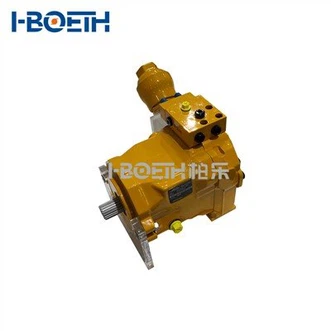


The main specifications when selecting these pumps mainly include flow, pump head, volumetric stroke, pressure, outlet diameter, power rating, horsepower and operating temperature. The material used to design a piston pump depends mainly on the application of the pump. Casing and cylinder materials need to have strength and need to be held close to operating environmental conditions. Materials in contact with the pumped medium need to be able to reduce rust caused by liquids. Some of the types of materials used in this hydraulic piston pump are discussed below.
Cast iron has high tension and scratch resistance, equivalent to high rated forces.
Plastic materials are inexpensive and resistant to rust and chemical attack.
Stainless steel alloys and steels have anti-rust and chemical-resistant properties, and have higher tensile strength than plastics, equivalent to better pressure.
Other types of materials used to design pumps mainly include aluminum, brass, bronze, ceramics, and nickel alloys.
Therefore, these are piston pumps, which are used like hydraulic pumps to power heavy and small machines. Piston pump applications mainly include transfer paint, pastry, chocolate, etc. The size of these pipes has been increased and is used in industry. Type piston pumps in radial and axial forms are also used in industrial applications, which consist of multiple pistons arranged in a circular cylinder. This is a question, what are the components of a piston pump? The advantages of piston pumps mainly include the following. In a pump, the function is reversed and force is transferred from the crankshaft to the piston in order to compress or the fluid in the cylinder. In some engines, the piston is also used as a valve by covering and exposing ports in the cylinder wall.