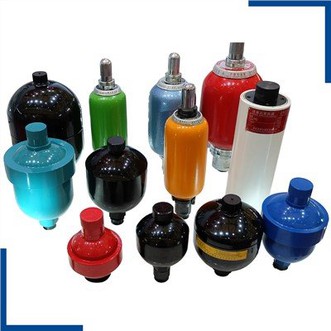


The plunger pump is a power component of the hydraulic system, which is driven by or an electric motor, sucks oil from the hydraulic oil tank, constitutes a pressure oil discharge, and sends it to the implementation element. Hydraulic pumps are divided into gear pumps, piston pumps, vane pumps and screw pumps according to their structure. The following small series introduces the varieties of hydraulic pumps and the operating principle of hydraulic pumps.
Varieties of piston pumps
1. Plunger pump: small size, simpler structure, not strict in the cleanliness of oil, cheaper quotation; However, the pump shaft is subjected to unbalanced force, severe wear, and large leakage.
2. Vane pump: divided into double-effect vane pump and single-effect vane pump. This kind of pump has uniform flow, stable operation, low noise, higher working pressure and volumetric power than gear pumps, and messier structure than gear pumps.
3. Plunger pump: high volumetric power, small leakage, can operate under high pressure, mostly used in high-power hydraulic systems; However, the structure is messy, the data and processing accuracy are high, the quotation is expensive, and the cleanliness of the oil is high.
The operating principle of the plunger pump
The pump is an energy conversion device that converts the rotating mechanical energy of the electric motor into hydraulic energy output. Hydraulic pumps are based on the principle of seal volume change to operate, so it is usually called positive displacement hydraulic pump, Figure 2-L shows the operating principle diagram of a single plunger hydraulic pump. In the figure, the plunger 2 is installed in the cylinder block 3 to form a sealing volume a, and the plunger is consistently pressed on the eccentric wheel 1 under the effect of the spring 4. The prime mover drives the eccentric wheel 1 to rotate the plunger 2 to reciprocate, so that the size of the sealing volume A is periodically replaced. When A changes from small to large, it constitutes some vacuum, so that the oil in the tank enters the oil cavity A through the check valve 6 at the top of the oil suction pipe under the effect of atmospheric pressure to complete oil absorption;